Elm, Brass, and Copper: Solutions for Labs and Manufacturing

A lab method that works on paper can fall apart when the sample count doubles. A production workflow that makes sense on the floor can become hard to trace when the data lives in spreadsheets, instrument files, handwritten logs, and people’s heads.
That gap is where Elm, Brass, and Copper (EBC) is starting.
EBC is Connecticut-based cooperative focused on software development, consulting, and technical support for laboratories and manufacturing environments. We build practical systems for teams that need better ways to collect data, connect equipment, track work, and make daily operations easier to manage.
Our focus is simple: build software that fits the way technical teams actually work.
Labs and manufacturers don't need more vague platforms that promise to solve everything. They need tools that respect real constraints, such as regulated processes, instrument quirks, change control, shift handoffs, sample custody, operator training, and the fact that production does not stop just because a system needs an update.
EBC exists to help with that work.
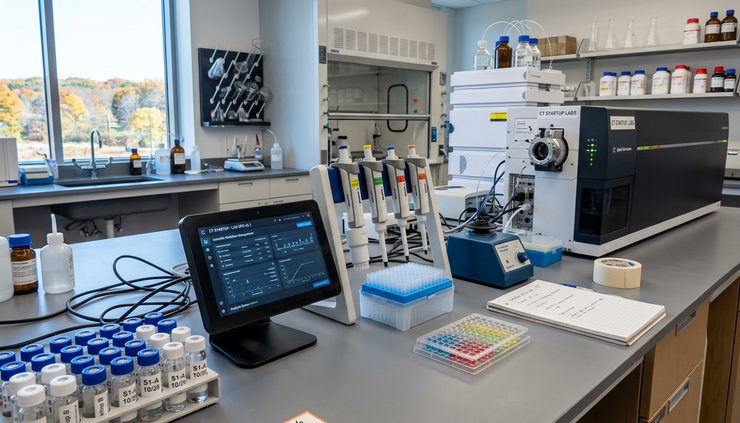
Why labs and manufacturers need software built around real work
Laboratories and manufacturing teams often carry more software burden than outsiders realize.
A single process might involve:
Instrument output files
Paper batch records
Shared spreadsheets
Email approvals
Barcode labels
Quality checks
Maintenance logs
Inventory counts
Reports for customers or regulators
Each piece may seem manageable on its own. The trouble starts when the pieces do not talk to each other. A technician may enter the same sample ID three times. An operator may copy values from a machine screen into a spreadsheet. A supervisor may spend the end of a shift reconciling production counts from multiple sources. A quality team may need to prove what happened, who did it, and when, but the evidence sits in separate places.
That's a system problem, not a people problem.
EBC works with teams that want software to reduce that friction. Sometimes the answer is a custom application. Sometimes it's a database cleanup, an integration, a reporting tool, or a better way to decide what to build next.
A good technical project starts with careful questions:
Where does data first get created?
Who touches it next?
What gets copied by hand?
Which steps create the most errors?
Where do people get stuck?
What records must be preserved?
Which systems already work well?
Which workarounds have become part of the process?
Those questions matter because lab and manufacturing software lives close to the work. If the system doesn't match the workflow, people will avoid it, fight it, or build a side process around it.
What EBC builds
EBC provides software development and consulting for teams that need useful, maintainable tools. The work can range from small internal utilities to larger systems that support production, quality, and lab operations.
That may include custom applications, workflow tools, data systems, integrations, reporting, and technical planning.
The common thread is fit. Software should match the process, the users, the data, and the limits of the environment.
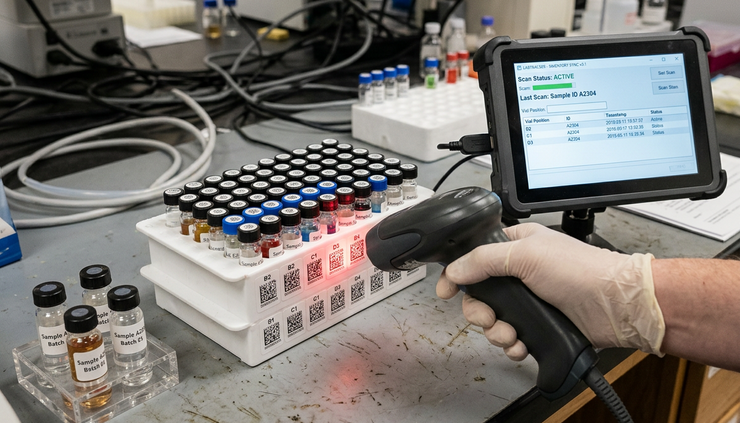
Custom software for specific processes
Some teams reach a point where off-the-shelf tools no longer fit. The workflow may be too specific, the data model may be unusual, or the team may need a focused tool that does one job very well.
Custom software can help with tasks such as:
Sample intake and tracking
Test request management
Batch or lot traceability
Production status boards
Equipment checklists
Digital forms
Internal dashboards
File parsing from instruments or machines
Audit-friendly record keeping
The best custom tools are not oversized. They solve a known problem, fit into existing work, and make it easier for people to do the right thing.
For example, a lab may not need a full replacement system. It may need a small application that gives each sample a clear status, attaches instrument output files, and flags missing review steps before a report is released. A manufacturer may not need a new enterprise platform. It may need a tool that connects work orders, operator checks, and quality holds in one simple view. Those are the kinds of problems where thoughtful custom software can pay off quickly.
Consulting before code
Not every problem should start with a build.
Many teams already have the tools they need, but not the plan to connect them. Others know something is broken, but the pain shows up in too many places to name one clean project.
EBC helps teams sort through that stage.
Consulting work may include:
Mapping the current workflow
Reviewing existing systems
Identifying manual data entry points
Defining software requirements
Planning a phased project
Comparing build and buy options
Preparing for system upgrades
Documenting data flows
Helping technical and operations teams agree on scope
This planning work matters. It helps prevent the common mistake of building software around assumptions. A few focused discovery sessions can save months of confusion later.
Good software projects do not start with screens. They start with the real path of the work.
Integrations that reduce duplicate effort
Labs and manufacturing sites often rely on systems that were never designed to work together. A lab instrument exports one kind of file. A production machine stores data locally. A quality system needs a summary. A finance or customer system needs a final result.
When people bridge those gaps by hand, errors get easier to make and harder to find.
EBC can help connect systems in practical ways. That might mean moving data between databases, reading structured files, building simple APIs, creating import tools, or making reports that pull from trusted sources.
The purpose is not to connect everything for its own sake. The purpose is to reduce duplicate work, improve traceability, and help teams trust their records.
For some labs, that may include support around an electronic lab notebook as part of a larger data and workflow plan. For others, it may mean building a lightweight bridge between instruments, spreadsheets, and a reporting process.
The right answer depends on the environment.
How we think about technical environments
Software for labs and manufacturing cannot be treated like a generic web project.
The environment shapes the system. A tool may be used with gloves on. A tablet may sit near equipment. A workstation may run an older operating system because a critical instrument depends on it. A plant floor may have unreliable network coverage in one area. A quality process may need records that are clear, reviewable, and protected from casual edits.
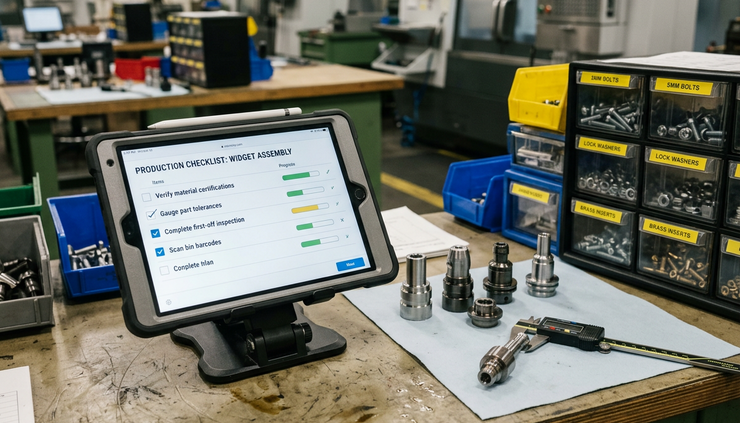
EBC approaches projects with those realities in mind.
That means asking about:
Data integrity
Who can edit data? What needs a timestamp? What changes need a reason? Which records must be preserved?
Usability under pressure
Can a technician or operator use the tool during real work? Are the screens clear? Are steps easy to recover if someone gets interrupted?
Maintenance
Who will support the system after launch? How are updates handled? What happens if a connected system changes?
Security
Who needs access? What should stay internal? How should accounts, roles, and permissions work?
Scale
What happens when the sample count increases, a new line comes online, or another site wants to use the same process?
Compliance and quality expectations
Which records matter for audits, customer reviews, internal quality checks, or regulated work?
Every project does not need a heavy process. A small internal tool should not be treated like a massive enterprise rollout. But every project does need clear thinking about risk, data, users, and support.
That is especially true when software becomes part of a lab or production process. If people rely on it to make decisions, the system has to be understandable and dependable.
Why Connecticut is a natural home for this work
EBC is based in Connecticut, a state with a long connection to manufacturing, precision work, materials, aerospace, medical technology, research, and skilled trades. That local history matters to us.
The name EBC reflects a respect for practical craft and industrial roots. Brass and copper are useful materials: they conduct, connect, shape, and last. That's the spirit we want to bring to software: useful tools, built carefully, with attention to how they perform over time.
Being based in Connecticut also puts us close to many kinds of technical work. The region includes labs, manufacturers, suppliers, research groups, quality teams, and production environments that all face similar software questions:
How do we reduce manual entry without losing control?
How do we track work clearly from start to finish?
How do we connect older equipment to newer systems?
How do we give teams better data without creating extra work?
How do we modernize one step at a time?
EBC serves clients nationwide, but our base in Connecticut shapes how we think. We value durable systems, direct communication, and respect for the people doing the work.
What working with EBC can look like
Every project is different, but a good engagement usually follows a simple pattern.
We learn the workflow
We start by understanding the process as it exists today. That includes the official process and the real one. Both matter.
People often describe a workflow one way, then reveal the real details when walking through an example. The exception handling, the spreadsheet someone maintains, the folder structure everyone depends on, the manual check that catches mistakes, those are often the keys to the project.
We define the problem clearly
A vague goal like “make reporting better” can mean many things.
A clearer goal might be:
Reduce duplicate entry between sample intake and reporting
Generate a production summary from machine data and operator checks
Track quality holds and releases in one shared system
Replace a paper form with a searchable digital record
Parse instrument files and attach results to sample IDs
Clear problem statements lead to better software.
We build in useful stages
Large technical projects get risky when too much is hidden until the end. Elm Brass and Copper favors visible progress.
That may mean a prototype, a first working version, a limited pilot, or a phased rollout. The structure depends on the project, but the principle stays the same: get real feedback early enough to use it.
We plan for what happens after launch
Software does not end at launch. People need support. Requirements change. Instruments get replaced. New reports are requested. A workflow that fits one team may need changes for another.
Planning for that early helps avoid fragile systems.
A good project should leave the team with:
Clear documentation
Known support paths
Understandable data structures
Sensible permissions
A plan for updates
Room to grow without starting over
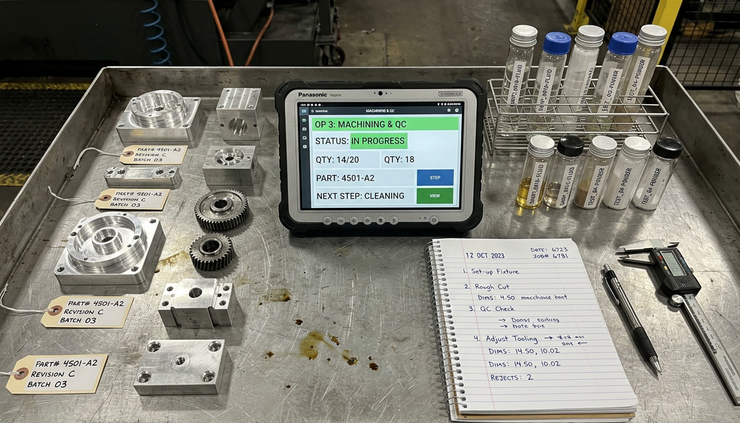
Built for the teams behind the data
The best software in a lab or manufacturing environment often feels quiet. It does not call attention to itself. It helps the right information appear at the right time. It prevents avoidable mistakes. It makes records easier to find. It gives people confidence that the process is under control.
Technical teams deserve software that respects their work. EBC is here to build it.